Friday, May 20, 2011

Connecting to My Grandfather

This morning, Greg and I met with Joe Parham, a man who has a small farm outside of Asheville. Joe is adamant about keeping the old family farm practices, lest they die out ... and his milk cow is a pretty little Jersey that is descended from the Biltmore dairy herd. In other words, he owns a cow that comes from the herd that my grandfather, George Marsden Wallis, so carefully developed, all those years ago. Pretty cool, huh?

I love discovering unexpected ties!

Joe will be demonstrating with his Border Collies at the WNC Highlands Celtic Festival.


part of Biltmore's legendary Jersey herd

For more about the Biltmore Dairy -- although there is no credit given to George Marsden Wallis for having developed the Jersey herd -- visit these two links:

Biltmore Dairy: An Udderly Fascinating History

A History of Outstanding Livestock

Tuesday, May 10, 2011

Remembering Memphis

Some years ago, my band, Marcille Wallis & Friends, performed for the Memphis Scottish Society's Burns Nicht Supper. In addition to its being an amazing event -- one of the world's highest-attended celebrations of Scotland's national poet, Robert Burns -- it was a time for our band (Donna Chapman, Frances Pisacane, Ann & Cal Lloyd, Greg McGrath) and me to get to really know each other as not only musicians, but as friends. We've reminisced a lot about that time ... about the long hours spent in Greg's and my mini-van as we all made the trip from Tampa to Memphis and back, telling stories about our respective pasts and sharing glimpses into our present lives.

And we reminisce about the wonderful dinner to which the Scottish society treated us, the experience that a few of us had sampling haggis for the first time (and the "bullet" dodged by Greg and Frances, both of whom were vegetarians), the fun of playing for the Memphis Scottish Country Dancers, and of course, the fun we had in our own performance set. The trip wasn't all work and no play, either, as the night previous to the dinner we visited the legendary Beale Street, birthplace of Rock 'N Roll, to see the iconic Sun Record Company, BB King's night club, and hear The Blues spilling out from practically every open doorway. For me personally, the trip afforded my first-ever glimpse of the Mighty Mississippi.

It's the Mississippi River and the many friends we made on that trip to Memphis that are on my mind as I write this note. Though as of this moment, the river has crested to just shy of its all-time record high flood stage, and soon the waters will begin receding, there will be weeks and months -- if not years -- of massive clean-up efforts. I'm sure that every one of my band-mates, as well as every one of the friends who like this page, join me in sending our heartfelt best wishes to the citizens of Memphis -- indeed, to all who live along the path of the raging river. We know your indomitable Scots spirit will see you through!

Sunday, April 24, 2011

Easter Sunday in White Springs


I know that my Redeemer lives!  This morning, the pealing of the carillon greeted the rising sun while a chorus of birds sang joyfully from the trees.  From all walks of life we gathered ... without respect to race, to political persuasion, to denomination ... to express our joy in this simple message: "I know that my Redeemer lives!"


Top photo is the Carilllon Tower at Stephen Foster State Folk Cultural Center, White Springs, FL. Other photos are: The Suwannee River, azaleas that grow in abundance at this beautiful state park, and of course the blue and white sky of a near-perfect day.


Friday, April 22, 2011

Happy Earth Day from the Deep South

Some time back, my friend Claudia started a Facebook discussion as to whether football or auto racing was more typically Southern. A spirited debate ensued, during which time Claudia, obviously a football fan, asserted most passionately that football was the true sport of the South. I knew she was wrong, but not being a NASCAR fan myself, was unable to muster anything more than a few weak counterpoints to her excellent arguments ... until today. Today, Claudia, I give you:


Mattress Racing

I can hear ya'll snickering from here. It's not that. And don't bother to Google this folks; you probably won't get very far. You'll see pages and pages of ads for racecar bedding for little boys, videos of people racing down ski slopes atop mattresses, and pictures of people racing on open water using mattresses as rafts. But the mattress racing I'm talking about involves old bedding and race cars. If I have my facts correct from listening to the local radio station broadcasting from beautiful downtown Live Oak, Florida, mattresses dot the racetrack and initially it's comical to watch the drivers try to dodge them -- and each other -- as they race around the track. But the real fun apparently begins when drivers are forced to run over the things, which often get stuck underneath the car until maybe getting wrapped around the drive shaft and perhaps igniting.

Ain't got nothin' in football that even comes close to that.

Mattress racing.  Now that's Southern -- that's us -- for you. Nothing, not even used bedding, goes to waste. Everything has a use, and if you hang on to it long enough, you'll discover its use. Southerners, the original recyclers; long before "Reduce, Reuse, Recycle" became the catchphrase for modern environmentalists, we adhered to the mantra "Use it up, wear it out, make it do or do without."

Happy Earth Day, Claudia and everybody else!

Wednesday, March 23, 2011

The Magic Pan

We're going back out on the road in a little less than a week.  Dulcimer?  Check.  CD inventory?  Check.  Iron Frying Pan?  Oh, you better believe -- Check!  The dulcimer and the CDs are tools of my trade, but that old black skillet is an important part of our life.

The pan once belonged to my grandmother; Meemaw, we called her.  It's at least 50 years old and probably a decade or two (or more) older than that.  It's been lovingly, properly, cared for over the years ... if you know how to care for cast iron cookware, then you know what "proper care" entails: we never use soap to clean it.  If you don't understand how to care for these utensils (or if you happen to work for the health department) you probably think this sounds pretty gross.  But this treatment helps to season the pan and contributes to its non-stick properties.  Every year, before we go on the road, I take time to re-"season" the pan by giving it a good scrubbing, coating it with a thin sheen of peanut oil and then placing it in a 200° oven for a couple of hours; this accounts for the shine you see in the picture.
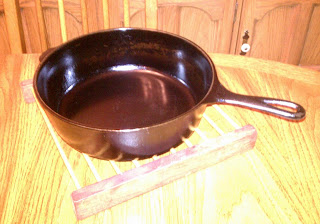

I can't even imagine trying to figure the number of meals I've consumed that have been prepared with that pan.  Nowadays I stir-fry a lot of vegetables, occasionally fix bacon or sausage, and it's my go-to for certain Cuban dishes.  

I make a mean corned beef hash with it, and there's a funny story associated with the hash: When my brother and I were little, we used to spend many weeks during the summer with our grandparents in Brooksville, Florida.  Mind you, we called our Brooksville grandmother "Mimi," and though she was not the owner of this particular pan, she did have a pan something like it; I imagine that many, if not most, Southern women of that generation used cast iron cookware.  Among our favorites of Mimi's dishes was corned beef hash, and when we went back home, we would plead with our mother to make hash.  But hers was never quite as good.  I hope I didn't hurt her feelings by telling her that it wasn't "quite right," and I never could exactly tell her what was different, but it ... just wasn't the same.  As an adult, I tried to make hash myself, but it just wasn't right ... until this pan came into my possession.  The very first time I made hash with this pan, I discovered that Mimi's secret ingredient must've been the cast iron pan she used.  Scientifically, it can probably be explained by the evenness with which the pan conducts heat.  I tend to think it must be magic.

The one dish that I've never learned to make, in spite of possessing the magic pan, is Meemaw's fried chicken.  I know she used this very pan to make her chicken: a perfectly seasoned, golden brown, crispy yet tender, moist but never greasy masterpiece.  I should've asked her to teach me, but somehow never got around to it.  Scientifically, there's probably a step -- or perhaps two -- that I never observed and therefore have missed in my own attempts.  I tend to think, though, there was a secret ingredient: Love.
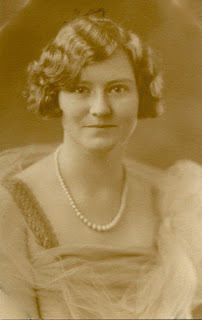

We have to be pretty spare in our choices of what to take on the road with us.  Everything has a purpose, and if an item can serve multiple purposes, all the better.  Like I said before, the dulcimer and the CDs are tools of my trade.  But the old black skillet serves its purpose as a cooking utensil, as a treasured "antique," as an heirloom connecting me to my wonderful Meemaw.  All of the memories and all of the love have seasoned that pan, and consequently memories and love season every meal that is prepared using it.

Wednesday, October 20, 2010

The Wisdom of Youth

Some of my favorite "moments" at festivals are spent with children.  Yeah, sometimes I shudder when a hyper-active child whirls into my space, and, without having really paid any attention to what I'm doing, exclaims, "Lemme try that!"  I do occasionally let kids play the dulcimer, but I try to size them up as to whether they will be respectful of the instrument; in fact, by asking them if they are willing to do exactly what I tell them to do (as to holding the hammers, and tapping gently).  After all, I don't want to spend 30 minutes re-tuning a dulcimer that's been pounded out of tune by an overly enthusiastic drumming.  Nor do I want to lose a $50 pair of hammers to rough treatment!  Although I'm always running a slight risk -- and I typically travel with only one instrument -- it's a beautiful thing to witness the sheer joy in a child who's discovering how music is made.  

Kids don't necessarily always want to play, either, but sometimes they can come up with questions and observations that are real doozies!  The schoolteacher in me tries to send them away with something meaningful.

Last weekend, a wiry, big-eyed little boy skidded up to me and wanted to know about the dulcimer.  "How do you play?" he demanded; "Do you strum it or what?"  It was toward the end of the day, and I'd already packed all of my gear and accessories, though I hadn't yet packed the instrument itself.  I briefly considered telling him that I was done for the day, but instead I gave him a tight-lipped little smile and said, "Here, let me show you."  

I hadn't played many notes when he called out, "Mom, you've got to come over and see this!"  His mother, along with a teen-ager who proved to be his sister, came over to listen.  When I wrapped up playing the merry little ditty, the girl thoughtfully remarked, "You know, Mom, you've been thinking about learning to play a musical instrument.  This would probably be a good one for you to try."  

"That's a great idea!" the boy chimed in.  The mother smiled and shrugged, saying, "Well, it certainly is beautiful."

"Mommm," he said, "all musical instruments are beautiful ... even the banjo!"  Then he did a comical little "air banjo" routine, mimicking its sound with a twanging "deedle-eedle-deedle-deedle" and dancing around.

All musical instruments are beautiful.  From out of the mouths of babes, huh?  He's right, you know.  I'm so glad I didn't turn him away!

Earlier that same day, a family had come by, and one of the boys looked over the CDs and selected A Mighty Fortress.  He handed it to his mother, who said, "So are you sure that's the one you want?"  He nodded, and she told him that the CD would be part of his birthday present, then.  

Turning to me, she asked if I would autograph the CD, and said that he'd asked to come to the show because he wanted some of my music for his birthday.

To Vincent: Blessings on your 13th Birthday.  From very humbled and honored me.

Tuesday, September 28, 2010

What Makes It Beautiful

I was playing my dulcimer the other day, when a couple approached me.

"I have one of these," the woman said; "I have the instrument, the stand, the case, the hammers, the electronic tuner, everything you need. Now I just need someone to teach me how to play."

I made a recommendation as to a potential teacher who lives in the general area, but the woman expressed disappointment that she would have to drive a little distance to get lessons. She informed me that she was an experienced musician, so I suggested that perhaps she could teach herself, as I (and many of my fellow players) had done. "Oh, that won't do," she replied. "I've already tried, but I can't figure it out. I'm sure that if someone would help me get started, I'd have it mastered in no time."

The couple lingered. While continuing to play, I asked what type of instrument she'd purchased.

"It's a Dusty Strings. At least the same size as yours, and probably bigger."

Greg, overhearing this, brightened. Thinking to make a connection with her, he said, "Sam Rizzetta, who built Marcille's dulcimer, is the man who did the basic designs for the Dusty Strings company."

She flinched in disbelief, blurting out, "But my instrument is very beautiful. It's got a rich-looking mahogany-colored top. It's an exquisite piece."

Briefly, I look at my own dulcimer through her eyes. It's 17 years old, now, and no one would describe it as cosmetically beautiful any more.  My hand traces the side rail, finding the small dimple I put in it less than 24 hours after taking possession of it: I'd slipped on ice when carrying it from my hotel room to the car. My mind still hears the rich chorus of tones that reverberated from inside the case, and I recall gingerly walking back to the room, my heart in my throat the entire time, to inspect the instrument to be sure that no major harm had resulted from my carelessness.

Sliding my hand further along the rail, I find one jagged, rough corner and recall the time that a gust of wind blew the dulcimer onto the pavement during a street fair in Dunedin, Florida.

Examining the sound board, I see evidence of other minor catastrophes and remember other episodes:

The time that the hickory nut fell out of the tree during a rehearsal in Ohio -- I still can't figure out how that nut managed to slip so perfectly between the strings to leave such a relatively large indentation!

The time that I was hustling to get off stage after performing at a festival in North Carolina -- I dropped one of my telescoping legs and left a gouge in the sound board.

The time that our band was giving a free "St. Patrick's Eve" concert to a Punta Gorda, Florida audience still shell-shocked from a punishing hurricane season -- the performance venue had not yet been able to repair the canopy over their stage, and the sudden rainstorm that blew in left a few water marks that I've not been able to rub out.

My dulcimer has endured snow flurrying onto it during a performance at Tennessee's Dollywood. Its tuning pins are ever so slightly corroded from salt air exposure up and down America's eastern seaboard, from Florida to Maine. It's been played in 100-degree-plus temperatures in Milwaukee, Wisconsin and sub-freezing temperatures in Orlando, Florida. It's collected dust at fairgrounds in Michigan and New York and in Georgia's Stone Mountain Park. It's traveled hundreds of thousands of miles and played millions of tunes.

It's been fondled by quick, sticky-fingered children with slow-footed parents.

It's been embraced by the hands of hearing-impaired persons who wanted to experience its sound through its vibrations. Its strings have been traced by the fingers of sight-impaired individuals who wanted to "see" it through their sense of touch.

To me, the scars and imperfections are "character marks." Like the wrinkles and dark spots on the face of an elderly person, each one was attained through mostly natural use, and perhaps occasional misuse, but each "flaw" has a story to tell. It is evidence of a full life, fully lived.

And to me, it is beautiful.


I jarred back into the present, at a loss for words. The slight was probably unintentional, but even if it was not, any response from me would have been unjustified. After a few minutes, the couple moved on.

I caught Greg's eye. "Honey, don't even think about it," he consoled.

"Oh, I'm not insulted by what she said, Greg. She's looking at the dulcimer as if it's a fine piece of furniture, rather than a musical instrument.  She'll figure it out eventually ... or not."

He smiled. "Well, I'm glad you didn't say anything to her."

I smiled back. "Well, it wouldn't have been right for me to say anything, really. But I couldn't help thinking that my dulcimer is, in fact, beautiful because

"I know how to play mine."